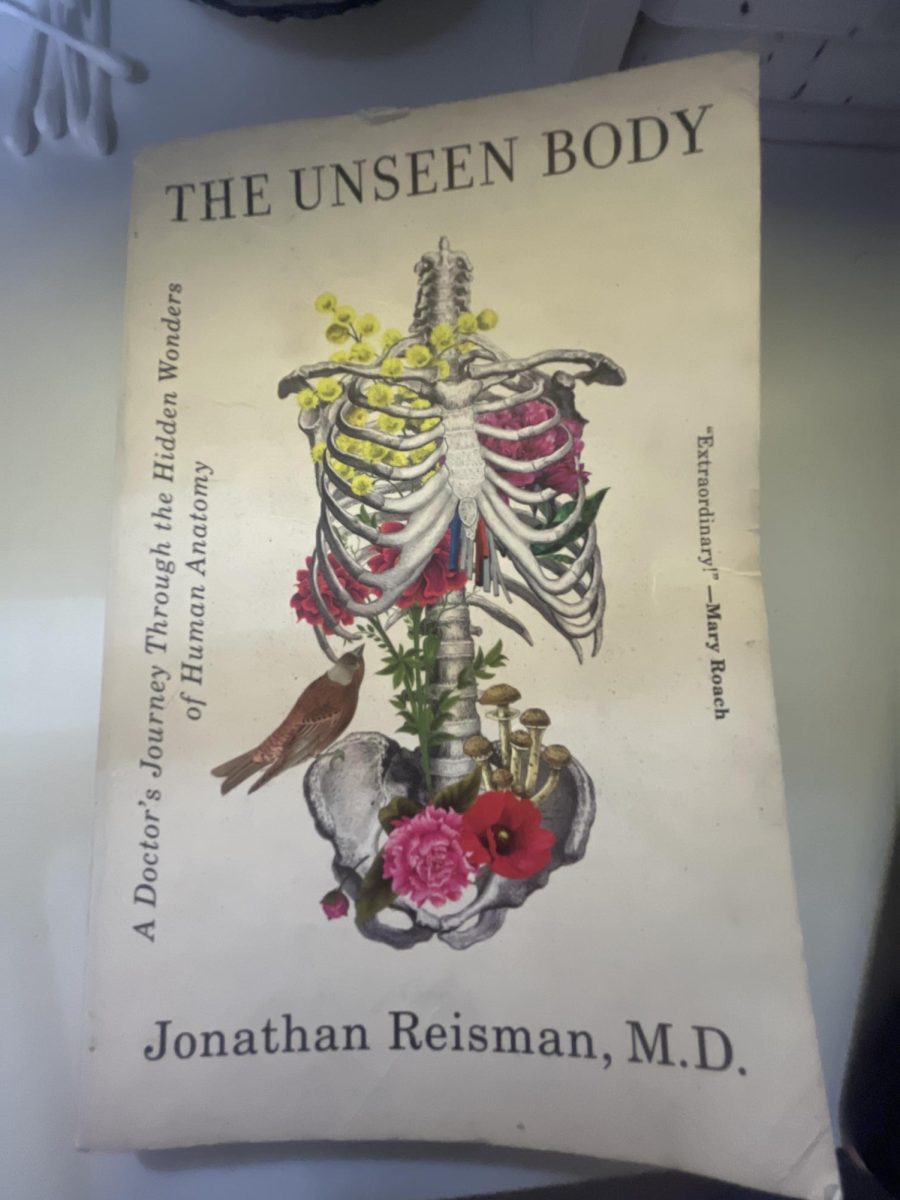
Johnathan Reisman’s The Unseen Body explores the hidden mysteries of human anatomy through storytelling, blending, medical insight with personal experience to make complex biology engaging, relatable, and unexpectedly fascinating for everyday readers.
Structure and Style
Reisman organizes The Unseen Body around specific body parts and systems. Ranging from the throat and heart to feces and fat. However, he uses each chapter as an entry point into a broader reflection rather than shuffling through the systems. His medical training and clinical experience give him authority, but his writing frequently shifts into more friendly and cultural encounters. Traveling in places like the Himalayas, Alaskan Arctic, and urban Indian clinics, Reisman connects anatomy to experiences he lived through. This hybrid style of writing is both the book’s strength and its most captivating aspect.
Accessibility and Voice
As Macmillan Publishers point out, “quirky, never-dull popular science… even readers familiar with college biology will enjoy the experience.” Reisman writes in a conversational, almost poetic style. Technical concepts are explained clearly and with analogies. For example, likening blood flow to rivers and tributaries. These analogies help make science accessible without oversimplifying. For many readers, this is captivating as reviews state the book strikes a tone that reminds them of Mary Roach’s popular science work; informative yet entertaining and attainable.
However, there are criticisms that the composition occasionally leans toward the irrelevant or tangential. Some readers find the author to wander away from strict anatomy. From travel observations or culinary experiments involving animal organs, these anecdotes or analogies can be inferred as distracting or uneven.
Content Highlights
What makes The Unseen Body distinctive is the way it reframes common bodily functions and parts. A chapter on feces, for instance, becomes a discussion on how waste reveals health clues; the throat’s messy design is used to explore evolution and hardships; fat is reconsidered not simply as storage, but as survival. These reassess bring out the “hidden mysteries” in parts of ourselves we usually ignore or contemplate about.
Perspectives
Reisman’s global experiences give his anatomy discussions a worldly texture. He compares medical observations with cultural practices. Such as hygiene differences in India. He reflects on how different societies understand the body and maintain healthy figures. These interludes enrich the book’s scientific core by humanizing it and broadening its lens.
Depth vs. Breadth
While Reisman’s range is wide, some readers looking for deeper, technical detailed writings may be unsatisfied. Reviewers on platforms like the StoryGraph note that the book “felt more like a collections of personal stories than a deep dive into anatomy,” suggesting the narrative can sometimes overshadow the scientific aspect. Conversely, the adventurous narratives sometimes outshine the educational content in a way that feels more like travel memoir than science writing.
Audience and Reception
Reader responses reflect this blend of strengths and limitations. Many find the book enlightening, witty, and moving. They appreciate how Reisman’s empathy and curiosity shape the narrative. Some Goodreads reviewers specifically praise the books engaging tone, with one reviewer noting it is “both informative and entertaining, making complex anatomy easy to understand.”
Others, however, feel the storytelling overshadows the science or that the detours into personal experience dilute the book’s educational value. A minority of readers report being put off by unfiltered descriptions related to medical practice or animal parts. They specified it was not because of the content being graphic, but simply because those sections feel tangential.
Overview
The Unseen Body isn’t a convention anatomy book, and that’s precisely its point. It’s a reflective exploration of what it means to live inside a complex organism, told by someone who sees the body as a landscape of mystery and discovery. If you’re curious about anatomy, enjoy science with a human touch, and appreciate writers who connect disparate ideas into a meaningful whole, Reisman’s book offers a rewarding and unusual ride. For those seeking a more rigorous, textbook-style guide, it may feel too scattered; but for curious readers who enjoy thoughtful storytelling, The Unseen Body shines.